a) Chapel Hill Black History Timeline
1866 First primary school for black students is opened by local Quakers on West Franklin St.
1890 Quaker Free School begins to accept financial support from Orange County school board
1898 Reverend Dr. Hackney opens “black graded school” (lower grades only)
1900 Chapel Hill’s population is 62% white, 37% black. Northside and Pine Knolls emerge as segregated service communities for university
1912 Hackney’s Industrial and Education Institution on Merritt Mill Rd. for upper grades (Hack’s High School)
1916 Orange County buys schools and launches Orange County Training School
1923 Orange County Training School destroyed by fire
1924 Orange County Training School reopens under the Rosenwald program at McMaster and Church Streets
1936 Chapel Hill High School built on Columbia Street. Burns down in 1942. Various locations housed school until 1947 when school construction at West Franklin Street location is completed.
1939 Construction of Negro Community Center (officially names Robertson Street Center) begins
1942 Robertson Street Center houses all-black B1 Navy Band participating in the Navy’s PreFlight School on UNC’s campus; shipped out to Pearl Harbor in 1944.
1947 Journey of Reconciliation, known as First Freedom Ride stops in Chapel Hill. These freedom rides began after Supreme Court decision declaring Jim Crow laws interfering with interstate travel unconstitutional. Bayard Rustin and others are arrested. Rustin is sentenced to twenty-two months of hard labor.
1949 Orange County Training School changes name to Lincoln High School. Class of 1950 was first class to graduate.
1951 Lincoln High School moved to new location on Merritt Mill Road (current site of Lincoln Center); old Lincoln High School building becomes Northside Elementary.
Floyd McKissick, Sr., and four others win suit against UNC Law School.
1953 Charlie Mason builds Mason Grocery Store on Rosemary and Graham Streets.
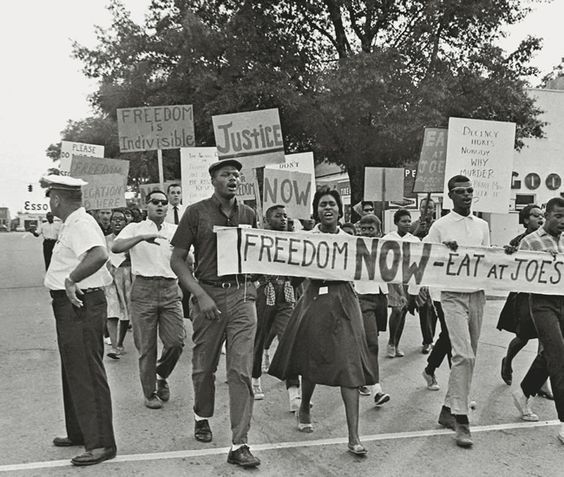
1960 Lincoln High students stage first sit-in in Chapel Hill at “Big John’s” Colonial Drug following the Greensboro sit-ins. Nine people are arrested.
Martin Luther King, Jr., visits Hargraves Center to meet with local black civil rights leaders.
Charlie Mason opens Starlight Supper Club on the corner of Rosemary and Graham Streets.
1963 Harold Foster, Lincoln High alum and student at North Carolina Central in Durham forms Committee for Open Business to fight against whites-only businesses and discriminatory practices in town.
North Carolina General Assembly passes the “Speaker Ban Law” presumably to halt protests across the state.
Chapel Hill/Carrboro Merchant’s Association sit-in leads to arrest of thirty-four people.
Lincoln High student Charliese Cotton is arrested with UNC student protestors and sentenced to thirty days in jail.
Intense protesting and arrests take place. Protestor at the “Rock Pile” is doused with ammonia.
1964 Chapel Hill Board of Aldermen (City Council) fails to pass ordinance banning discrimination in places of public accommodation by a vote of 6 to 2.
On February 8, protestors storm the court during a UNC-Wake Forest basketball game and form human chains on Raleigh Street
Two UNC students and two Lincoln high students fast in front of the post office during Easter week.
Over 1500 demonstrators are arrested. Fifteen leaders are sentenced to six-month prison terms; the UNC student movement is dissolved.
President Johnson signs the Civil Rights Act making discrimination in public places and businesses illegal.
1966 Chapel Hill-Carrboro City Schools are officially desegregated.
1969 Howard Lee becomes first and only black mayor of Chapel Hill and first black mayor of any predominantly white city or town in the South.
1972 Chapel Hill Board of Commissioners selects Rogers Road neighborhood area for site of new county landfill, promising community facilities and infrastructure in return. These promises were ignored and in the early 1980s the landfill was expanded. For decades, neighborhood activists led by Rev. Robert Campbell and David Caldwell, Jr., fight against environmental racism and the health and environmental impact of the landfill on the neighborhood.
1973 Roberson Street Center is renamed “Hargraves Center” after William Hargraves, former Parks and Recreation Commission Member killed in an auto accident.
1996 Empowerment, the town’s first community development center, is established.
2004 Northside and Pine Knolls become Neighborhood Conservation Districts, restricting development.
2007 A coalition of students, ministers, and residents launch UNC NOW (United with the Northside Community Now) to protest the Greenbridge development and gentrification.
David Caldwell and Rev. Robert Campbell lead formation of Rogers-Eubanks Neighborhood Association. (RENA)
2009 UNC professor Della Pollock, Reverend Troy Harrison, UNC students, and local residents establish Marian Cheek Jackson Center for Saving and Making History at St. Joseph’s CME church on the corner of Roberson and Rosemary Streets.
2010 The black population in Northside decreases from 1159 in 1989 to 690.
2011 Property taxes rise 100-400% due to rising property values and fifty percent of building permits granted for demolition and new construction.
Old Northside Elementary school is razed to build new Northside Elementary.
2013 The Jackson Center moves to its current location at 512 W. Rosemary Street.
Orange County landfill in Rogers Road neighborhood is closed.
2014 New Rogers Road Community Center on the corner of Edgar and Purefoy Roads is dedicated.
2015 UNC Chapel Hill makes a $3 million dollar, no interest loan to the Center for Community Self-Help to begin landbanking in Northside, which enables the purchase of property for future use and development in the community’s interest. The town, university, and community launch the Northside Neighborhood Initiative to preserve Northside’s future.
2017 Northside sees the first increase in its black population in forty years; twenty at-risk properties are secured in the landbank; Orange Habitat builds twelve new affordable homes in Northside
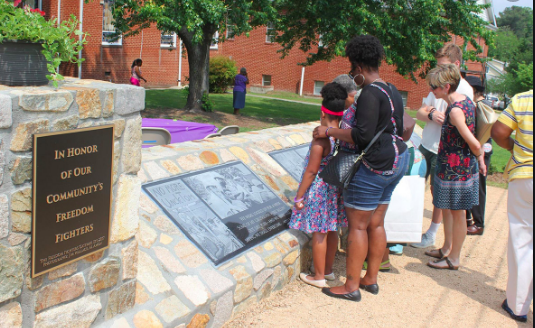
First of four proposed Northside gateways is constructed and dedicated in honor of Northside’s Freedom Fighters.
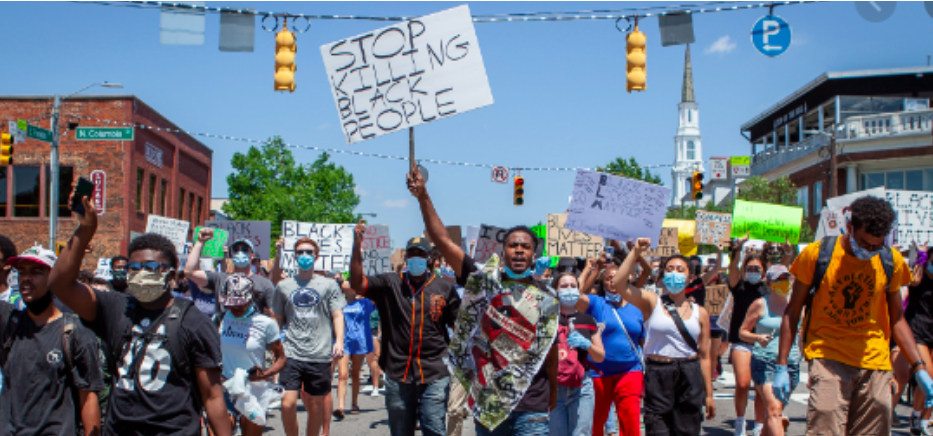
2020 Black Lives Matter march following the killing of George Floyd and Breonna Taylor takes place on Franklin Street.
b) Chapel Hill School Desegregation Timeline
1866 First primary school for black students is opened by local Quakers on West Franklin St.
1890 Quaker Free School begins to accept financial support from Orange County school board
1898 Reverend Dr. Hackney opens “black graded school” (lower grades only)
1912 Hackney’s Industrial and Education Institution on Merritt Mill Rd. for upper grades (Hack’s High School)
1916 Orange County buys schools and launches Orange County Training School
1923 Orange County Training School destroyed by fire
1924 Orange County Training School reopens under the Rosenwald program
1936 Chapel Hill High School built on Columbia Street. Burns down in 1942. Various locations housed school until 1947 when school construction at West Franklin Street location is completed.
1949 Orange County Training School changes name to Lincoln High School. Class of 1950 was first class to graduate.
1954 Supreme Court reaches Brown v. Board of Education decision declaring segregation in education unconstitutional and ordering desegregation of all educational institutions “with all deliberate speed.”
1956 State of North Carolina passes “Pearsall Plan to Save our Schools” to slow down pace of desegregation. The plan permitted local school boards to determine whether or not to grant permission to black students requesting transfer to white schools. Chapel Hill school board denies numerous black students’ transfer requests.
1959 Stanley Vickers sues after being denied transfer to Carrboro Elementary school, the school closest to his home.
1961 Vickers family wins their lawsuit. Stanley Vickers begins attending Carrboro Junior High School. Some black students transfer to white schools, but school district does not provide transportation. First black students admitted to Estes Hills.
1961-64 Civil rights movement in Chapel Hill. Many local students participate in marches and sit-ins and demand desegregation of schools.
1966 Chapel Hill High School opens at current location on High School Rd.
1967 School district officially begins desegregation. School assignments redrawn to give each school similar ratio of black students to white students. Lincoln High School closes and black students begin attending Chapel Hill High School.
1968 Riots at Chapel Hill High School. Students demand recognition of Lincoln’s contribution. As a result, CHHS adopts Lincoln High School colors and mascot, the Tiger, but Lincoln trophies are lost.
2000-01 Bob Gilgor interviews Lincoln High alums. (lincolnhighalumni.org/interviews.shtml)
2001 Chapel Hill Museum opens exhibit on Lincoln High School.
2016 Fiftieth reunion of Lincoln High’s last graduating class, Class of 1966
 MIGHTY